Protect your identity
Why looking after your identity matters
Your identity is essential in everyday life – whether it’s for proving your age, applying for a licence, loan or passport or even getting a mobile contract. It’s how you show organisations that you are who you say you are.
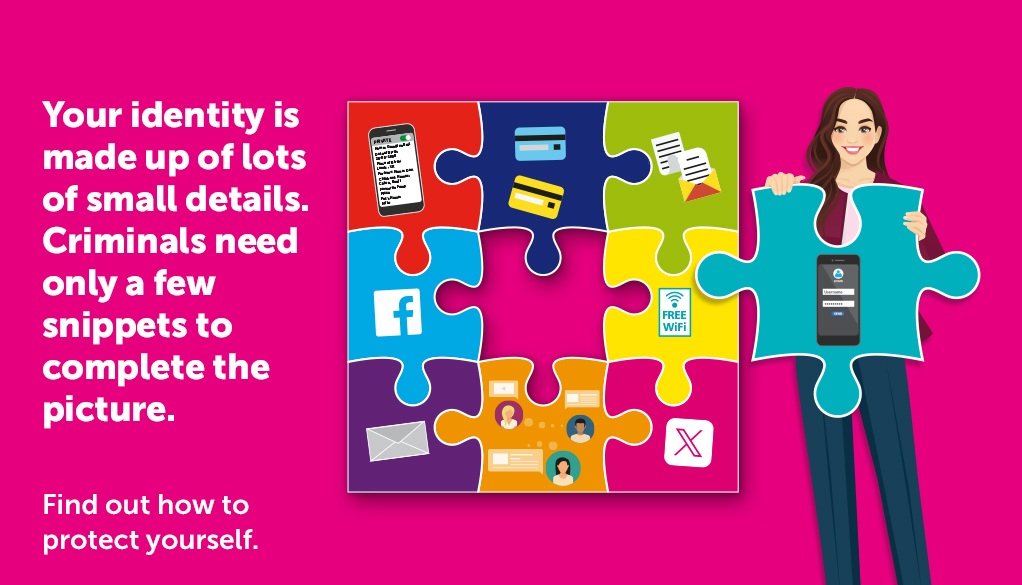
If a criminal gets hold of your identity, they can pretend to be you too. They may open accounts, take out credit or pass your details on to other criminals. They can even commit crimes in your name.
Most identity theft starts online. Fraudsters gather snippets of information from social media, insecure email accounts and anything you’ve shared publicly. They also look for paperwork thrown away without shredding – items like bank details or National Insurance numbers. It takes only a few pieces for them to cause serious harm.
Top tips on how to protect yourself
- Keep your account details and identity information private, even from people you trust.
- Think before you post. Details like birthdays, pet names or family info can help criminals guess passwords. Never share photos of passports, driving licences or other sensitive documents.
- Don’t give out personal information unless you’re certain the request is genuine. If unsure, contact the organisation using a number you know is correct.
- Keep your devices up to date: apps, software and operating systems. Automatic updates are best.
- Try creating strong passwords made from three random words, with a mix of letters, numbers and symbols. Never reuse passwords across different accounts.
- Your email account needs its own strong, unique password – it’s often the gateway to everything else.
- Avoid using public Wi‑Fi for anything private or financial. Some hotspots are insecure, or even set up by criminals.
- Shield your screen when entering PINs or personal details on devices or ATMs.
- Choose paperless bills and statements where possible.
- Store important documents safely, and shred anything you no longer need, ideally with a cross‑cut shredder.
- Check your credit report regularly to spot any accounts or finance agreements set up in your name.
For more guidance, visit getsafeonline.org, choose ‘Protecting Yourself’, then ‘Preventing Identity Theft’. If you believe your identity has been stolen, report it to Report Fraud on 0300 123 2040 or at reportfraud.police.uk. In Scotland, contact Police Scotland on 101.
#ProtectYourIdentity

Back to Basics
We'll help you stay online with safety and confidence.
Monthly newsletter
Subscribe to PROTECT! for the latest news, views and advice.
Check a website
Determine whether a website is likely to be legitimate or a scam … before you visit it.

Neighbourhood Alert
Register to receive Neighbourhood Alerts.

Become a Get Safe Online Partner
Demonstrate your commitment to online safety and gain many exclusive benefits.
Self Help Tool Centre
FREE tools to help you keep safe when using the internet.

Get Seraph Secure
Get protected against remote access attacks.

Is it a scam?
A simple way to check instantly if something you’ve received is a scam or not.

Spot the AI
We’ll help you learn to spot the difference between videos, voices and other content produced by AI, and the real thing.